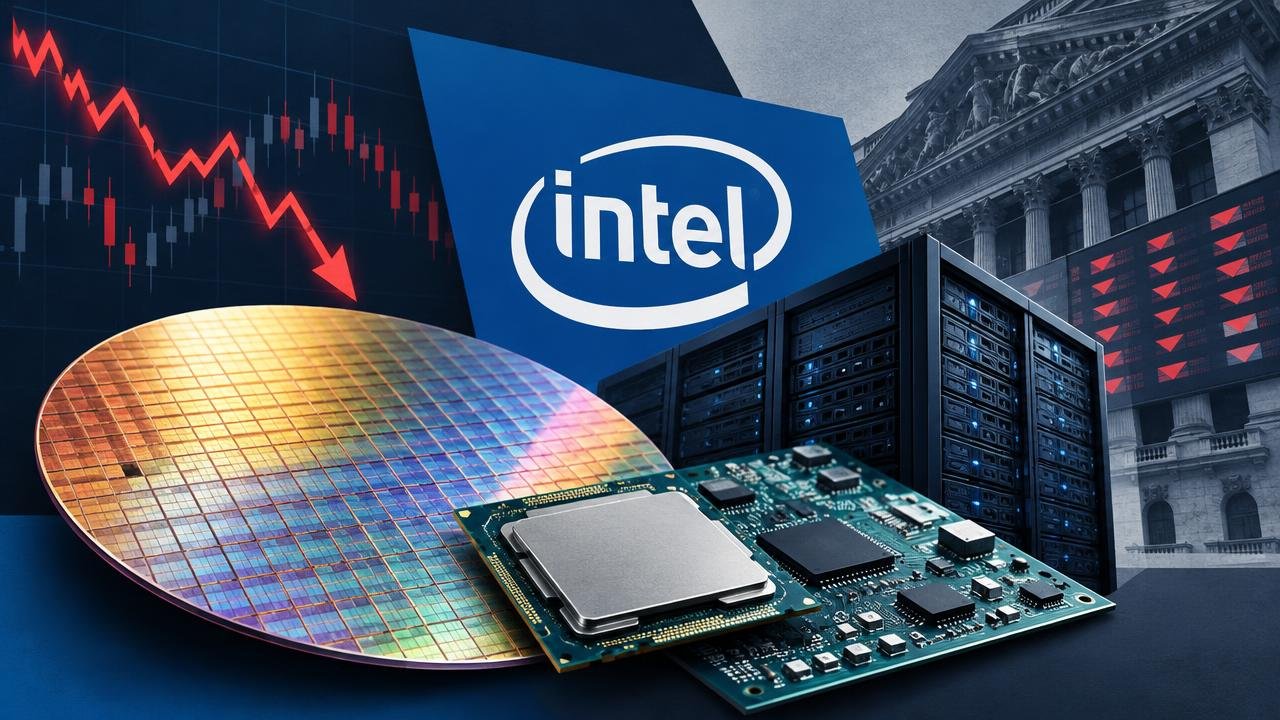
Intel and Amazon pressure the Nasdaq in late October, while energy and financials support the Dow
Intel's balance sheet, with lower-than-expected revenue projection, and fears about spending on AI bring down technology stocks; energy and finance clash.
BY THE X-TRADER NEWS NEWSROOM · REPORTING FROM MARKETWATCH · 2 MIN
Shares of Intel and Amazon became the main focus of nervousness on Wall Street in the last trading session of October, Friday, October 30. According to MarketWatch, the shares of both companies were expected to suffer strong falls, although the headline itself highlighted that the month's winners could surprise. The movement began with Intel's balance sheet, released after the close of Thursday, October 29th.
The result for the third quarter of 2026 came in above expectations, and the company reversed the loss for the period, according to Money Times. The problem appeared in the projection: revenue forecast for the fourth quarter was below Wall Street estimates, and the company cited a drop in PC sales. As a result, shares fell more than 20% in Friday's pre-market, according to the same vehicle.
Amazon also displeased investors with its balance sheet, and the combination of the two news put pressure on the index. According to Money Times, Intel's fall took the Nasdaq into negative territory, with a drop of more than 2% in the first hours. Investing.com recorded US futures falling, with the Nasdaq down 2%, and pointed to Amazon and Intel as the reason.
The month's picture, however, is more heterogeneous. As of October 30, the Nasdaq Composite was down around 2.5%, and the communications sector of the S&P 500 was down more than 14%, according to MarketWatch. At the other extreme, the energy sector rose around 12% and the financial sector, around 10%, and the Dow Jones was on track to close October on a high.
Risk aversion was not restricted to the United States. Also according to Investing.com, European stock markets also fell, and Amazon and Intel were cited as a source of fear about the volume of spending on artificial intelligence. For readers who follow technology, this is the central point, because the same theme appears as a common reason for both crashes.
What changes for the investor
The episode shows how a single swing can pull down an entire index: Intel's fall was enough to take the Nasdaq negative in the first hours. It is worth separating the result for the finished quarter from the projection for the following, as Intel exceeded expectations in the first and disappointed in the second, and it was the projection that weighed on the shares. In the next balance sheets and statements about spending on AI and demand for PCs, the market should look for signs about whether today's movement is one-off or whether it will continue.
Automatically translated from Portuguese.