Where does space begin? 20 km dispute involves emblems, tourism and hypersonic weapons
There is no consensus on the altitude of 100 km, 80 km or 50 miles, and the difference weighs on certifications, advertising and rules for commercial spacecraft.
BY THE X-TRADER NEWS NEWSROOM · REPORTING FROM O ANTAGONISTA · 2 MIN
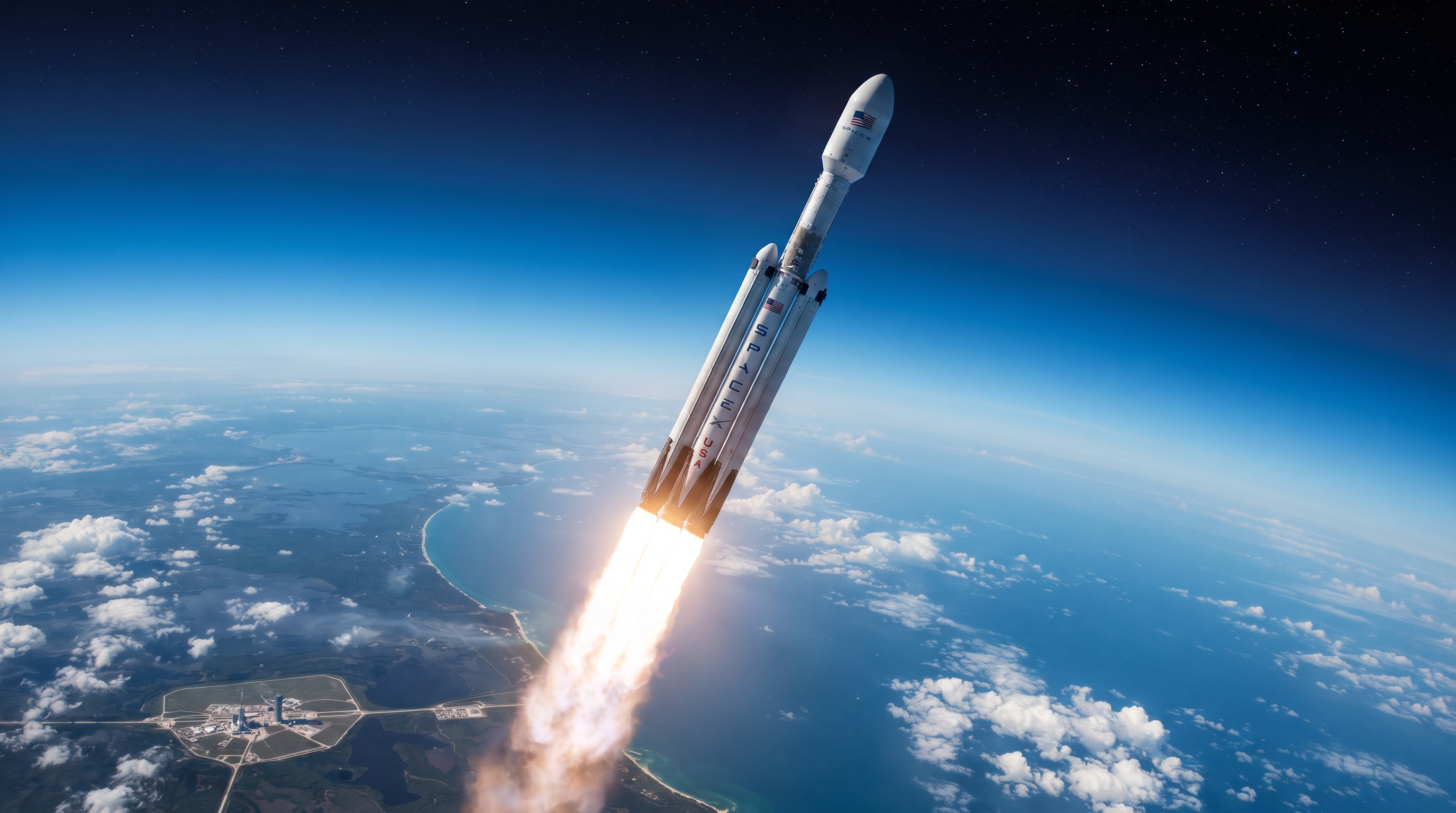
Where does the atmosphere end and space begin? According to O Antagonista, the question still has no single answer, and the approximately 20 kilometers in dispute have become important for sectors ranging from the granting of astronaut badges to space tourism and hypersonic weapons.
One of the most cited references is the Kármán line, named after Theodore von Kármán, an engineer and physicist who calculated that, at very high altitudes, a ship needs to reach orbital speed to avoid falling. Many countries adopt 100 kilometers as the beginning of space. According to Space Daily, cited by O Antagonista, this is also the International Aeronautical Federation standard for recording records.
American agencies follow another criterion. They adopt 50 miles, the equivalent of 80 kilometers, as the official limit. According to the text, NASA and the United States armed forces consider space from this altitude, a rule that emerged in the 1950s, in tests of the X-15 rocket plane. At the time, pilots who surpassed this mark received astronaut wings from the American government, and NASA maintains the measure.
The result is a peculiar situation. A spacecraft at 85 kilometers counts as an official astronaut for the US government, but does not leave the atmosphere for the rest of the planet. According to O Antagonista, the divergence also affects the advertising of private space tourism companies.
The reference altitude also defines the legal framework for commercial spacecraft and satellites. When crossing the national border, the vehicle enters international territory, which makes the criterion a legal issue as well as a technical one.
Researchers propose unifying the limit at 80 kilometers for physical reasons: before 100 kilometers, the atmosphere loses support and changes its behavior abruptly. According to the text, recent mathematical evidence was not enough, and international entities are hesitant to change their records. Therefore, there is no consensus on the altitude of the beginning of space.
What changes for the investor
In the case of the investor, the issue weighs more on regulation and predictability than on immediate results. A clearer definition could guide the framing of satellites, launchers and space tourism operations, with an effect on license deadlines and costs. For those who defend free markets, stable and known rules reduce the risk of operating in undefined terrain. As the text shows that the change depends on international entities that are still hesitant, the uncertainty is likely to continue for some time, and it is up to the investor to monitor the regulatory decisions and contracts of companies in the sector.
Automatically translated from Portuguese.