Cyclist discovers 1.5 meter rule for passing bicycles and exposes distance little known by drivers
According to O Antagonista, the Traffic Code requires 1.5 meters of lateral distance when passing or overtaking a bicycle, and the very serious infraction costs R$ 293.47.
BY THE X-TRADER NEWS NEWSROOM · REPORTING FROM O ANTAGONISTA · 2 MIN
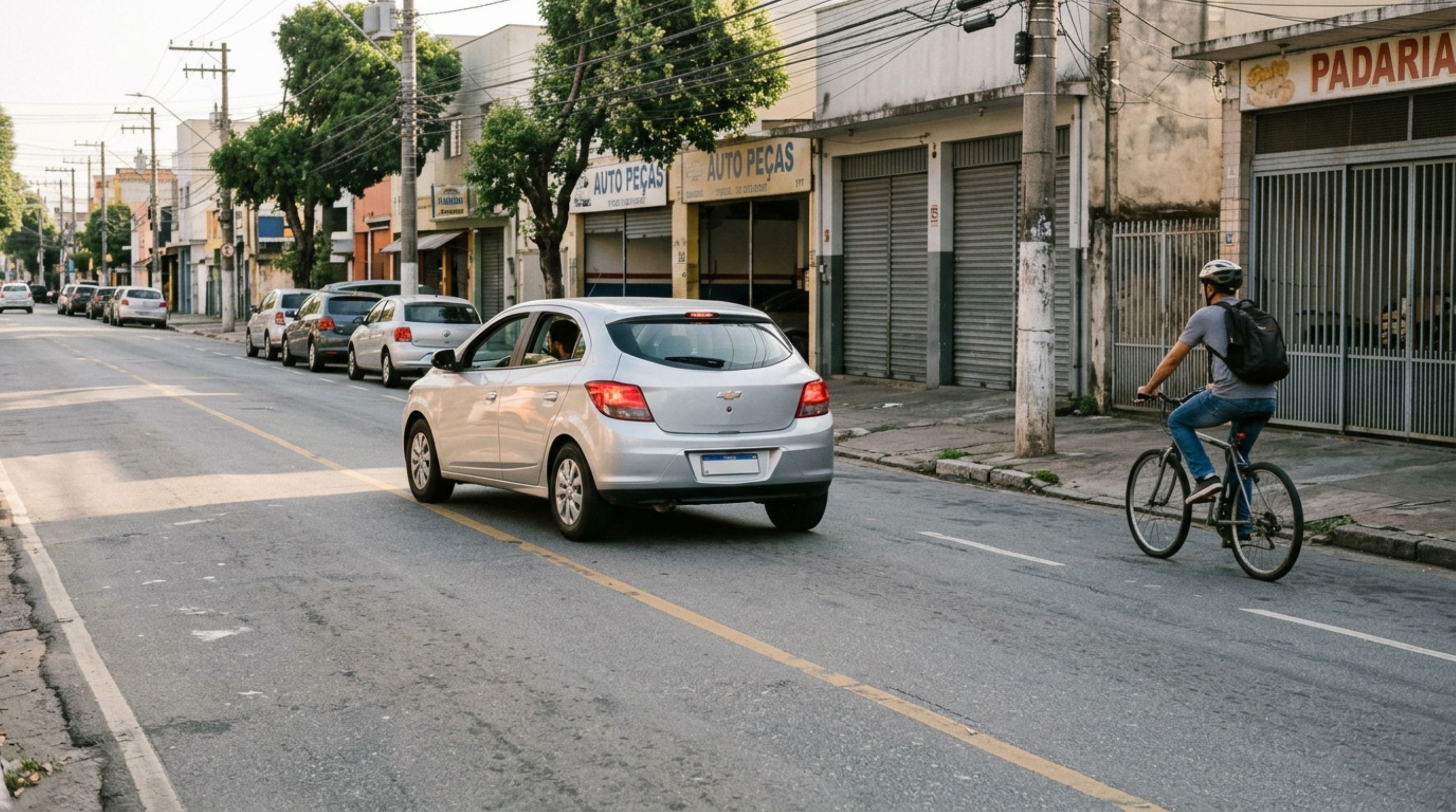
A cyclist who cycles every day along an avenue without a bike lane realized what many drivers never notice: cars pass too close to the bicycle. It was when looking for legislation that he discovered that the Brazilian Traffic Code provides for a minimum distance for these maneuvers. The case, reported by O Antagonista, is a hypothetical scenario, but the data it reveals is objective.
According to O Antagonista, article 201 of the CTB determines a minimum lateral distance of 1.5 meters when passing or overtaking a bicycle. The measurement is lateral, not the space between the front of the car and the rear of the cyclist. The rule also applies to simple passing, and not just to overtaking followed by returning to the lane.
Failure to comply with article 201 is an infraction of a medium nature and does not require a collision to be characterized. Article 220, item XIII, deals with failing to reduce the speed compatible with safety when overtaking a cyclist. This infraction is very serious, it carries a fine of R$293.47 and seven points.
The Code does not set a single speed for overtaking a bicycle. It is up to the driver to adjust the gear to the road conditions. When there is no width for the required clearance, the driver must wait for a safe and permitted opportunity, rather than forcing passage.
Among the precautions listed by O Antagonista are reducing speed in advance, keeping a distance behind the bicycle, checking lateral space throughout the maneuver, respecting signage and not cutting off the cyclist's path after passing. The report also reminds you that you should not overtake in case of prohibition or unsafe conditions.
The central point of the case is the coexistence between modes on roads without cycling infrastructure. The discussion is not about creating new obligations, but about complying with a rule that is already in force and which falls on those who manage. For those who defend clear rules and individual responsibility, the lesson is that the problem tends to lie less in the law and more in a lack of knowledge of it.
What changes for the investor
Based on the facts found, the rule already exists in the CTB and does not contain any elements that allow it to project a direct effect on the stock market, interest rates or the dollar. Still, companies with fleets, delivery drivers and mobility services have drivers exposed to these penalties, and the severity of the infraction can indirectly affect operational costs. What is worth monitoring is whether this exposure translates into expenses or routine changes in these companies. This does not constitute a recommendation to buy or sell assets.
Automatically translated from Portuguese.