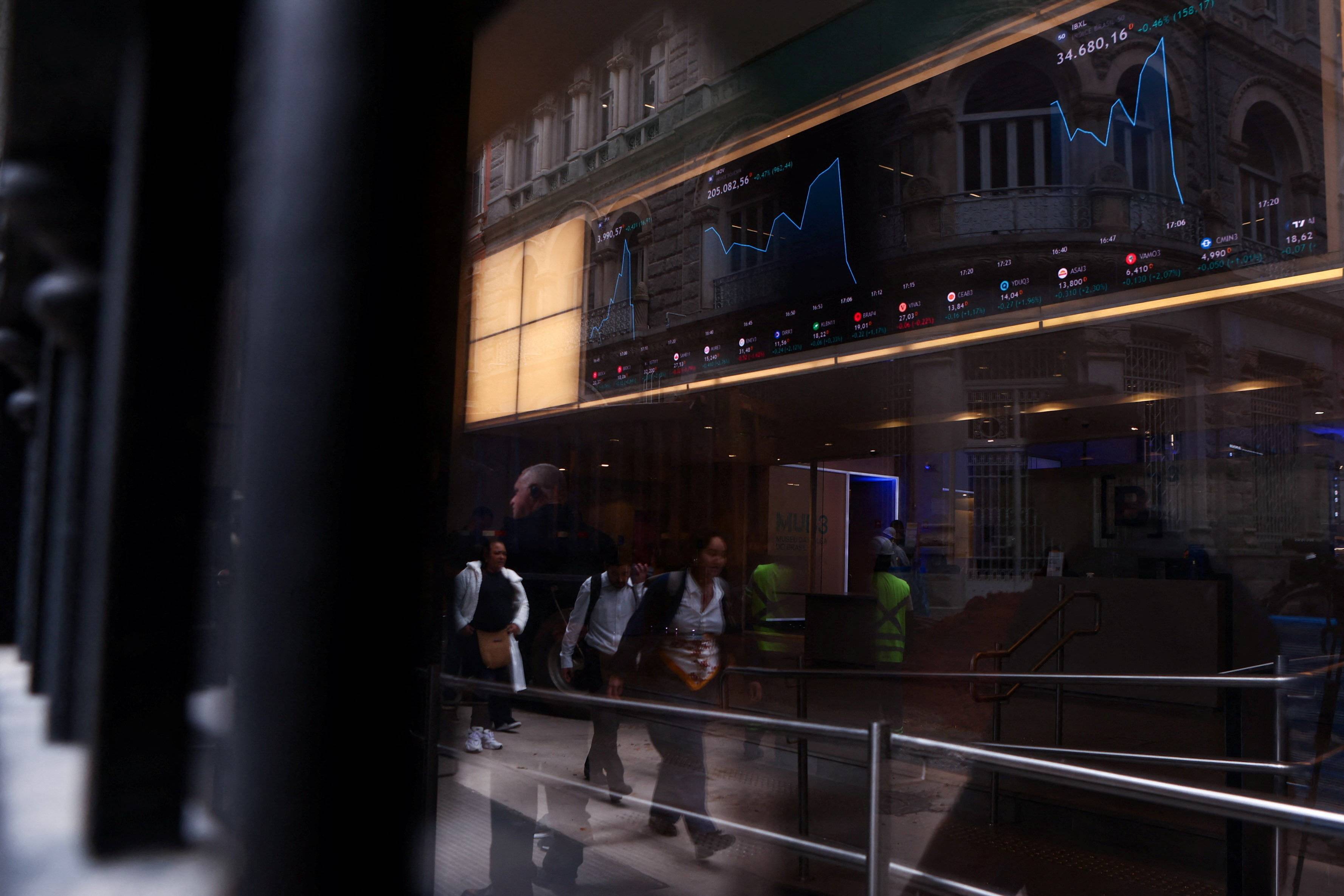
Ibovespa has the worst post-election week in 37 years and B3 companies lose R$963 billion
According to InfoMoney and Times Brasil, the fall began on Monday, October 26th, with a circuit breaker and a rise in the dollar; interest and public bills weigh heavily.
BY THE X-TRADER NEWS NEWSROOM · REPORTING FROM INFOMONEY · 3 MIN
Ibovespa experienced its worst post-presidential election week in 37 years, according to Times Brasil, with sessions of sharp decline until Friday, October 30th. According to InfoMoney, the index fell 18.12% in the week, the biggest weekly drop since March 2020, when the low was 18.88%. Elos Ayta, cited by InfoMoney, classifies the period as the fifth biggest weekly drop in the Ibovespa since the Real Plan. In the same survey, B3 companies lost R$963 billion in market value after the second round.
The movement began in the first trading session after the vote, on Monday, October 26th. Lula beat Flávio Bolsonaro (PL) in the second round. According to Seu Dinheiro, the market was betting on an opposition victory based on polls, and Flávio Bolsonaro had come out ahead in the first round. The bet was not confirmed, and investors' reaction came right after the opening of business.
In Monday's trading session, the Ibovespa fell 13.88% and closed at 176,608.23 points. According to Times Brasil, the circuit breaker was activated, and the last time this had occurred was during the pandemic. On the same day, the dollar rose 8.31% and was quoted at R$5.4027.
When explaining the movement, InfoMoney cited the worsening expectations for interest rates and the fiscal framework, in addition to risk aversion abroad. Times Brasil points in the same direction and attributes the drop to the review of expectations about public accounts and the debt trajectory.
In October, the Ibovespa accumulated a drop of 9.88%. Among the shares, VAMO3 and MGLU3 appear with a decline of more than 50%, according to an InfoMoney headline, which does not inform the period considered. While the stock market lost value, Seu Dinheiro highlighted that Tesouro Selic, CDI and Poupança were cited as the only investments without volatility after Lula's re-election.
What changes for the investor
The episode indicates that, in the short term, Brazilian asset prices began to react more to signals about interest rates and public accounts than to the electoral result itself, according to the sources consulted. For those who invest in the stock market, the point of attention is the fiscal trajectory and the debt path, precisely the factors that the sources themselves pointed out as the cause of the fall. For those who operate the dollar, the 8.31% increase on Monday shows how a change in expectations can affect the exchange rate in a few hours. None of the sources address the duration of this movement, and this text does not make projections about prices.
Automatically translated from Portuguese.