VAT close to 30% and uncertainty worry small businesses, says Thiago Nigro
Businessman and financial influencer sees the risk of a lack of tax predictability from 2027 onwards, with new tax rates still to be defined.
BY THE X-TRADER NEWS NEWSROOM · REPORTING FROM GAZETA DO POVO · 3 MIN

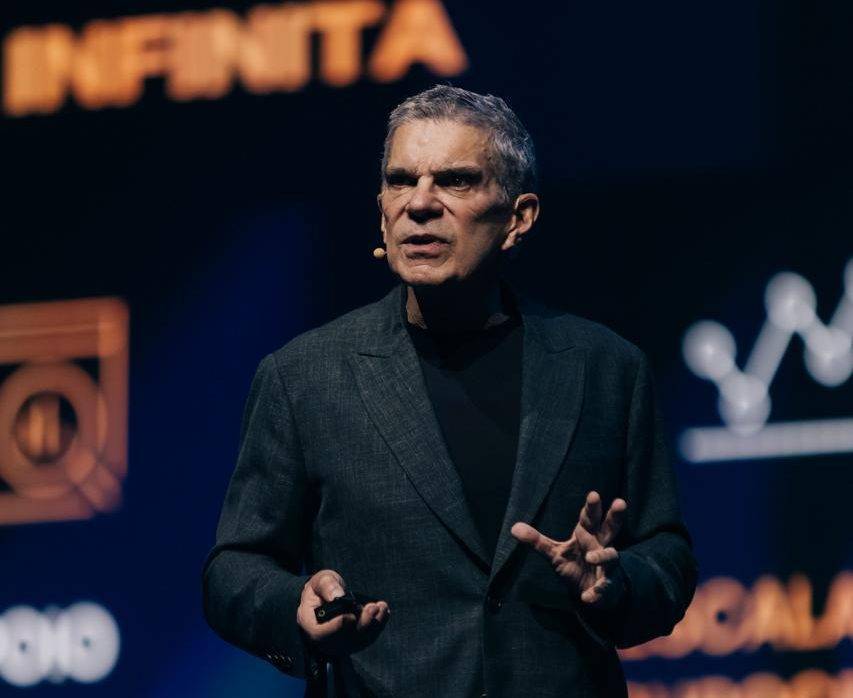
While the Senate has not yet set the final rate for the new consumption tax system, those who feel the uncertainty most are small business owners. This was the warning from Thiago Nigro, founder of Grupo Primo and creator of the channel O Primo Rico, during an interview at ABF Con 2026, held in Comandatuba, Bahia. According to Gazeta do Povo, who traveled at the invitation of the event, he stated that the lack of tax predictability from 2027 onwards worries small businesses.
The backdrop is tax reform. According to Gazeta do Povo, the TCU calculated the CBS reference rate at 11.3%, which replaces PIS and Cofins in 2027, but the number still depends on the final word of the Senate. The state and municipal component, IBS, does not have a definitive rate, and the projection cited is 18.7%. Added together, the two reach around 30%, a value that is not yet definitive. The previous estimate for dual VAT was 27.91%, and the same report records market analysts admitting the possibility of reaching 34%.
For Nigro, the problem is not just the weight of the load, but the time spent carrying it out. He said that a businessman spends around 1,500 hours a year just to calculate taxes, with the exception “if I’m not mistaken”. Even as an estimate, the number shows a compliance cost that falls more heavily on those who do not have a tax department.
The tone of the interview was one of outburst. According to Gazeta do Povo, Nigro stated that “it is desperate to undertake a business in Brazil”, a phrase that summarizes the perception of many smaller business owners faced with rules that change without a firm date.
The effect also reaches franchise chains. Also according to Gazeta do Povo, tax predictability weighs heavily on the opening of units, the expansion of networks and the formation of prices, three decisions that depend on cost projections. Without a closed rate, this projection works with a greater margin of error.
From a liberal perspective, the central point is less the size of the load and more the rules of the game. A high but simple and stable tax allows for planning. A tax whose number changes during processing transfers risk to those who produce and contract. Therefore, the definition of the final rate is also a debate about fiscal responsibility.
What changes for the investor
For those who follow the stock market, the main factor is the Senate's decision on the rates, since the difference between a scenario of around 30% and another of 34% changes the account of companies that sell to small businesses, operate with franchises or depend on consumer prices. Sectors with many small customers or expanding networks tend to feel the change first, while companies with a more robust tax structure can better absorb uncertainty. This article does not project how the shares will react. What the facts show is that the lack of a closed number makes planning difficult for those who decide with a long horizon.
Automatically translated from Portuguese.