Gleisi attacks the market and says that debating interest rate proposals is not equivalent to adopting it
PT deputy accuses the market of panic after Lula's alleged meeting with André Lara Resende and states that talking is not adopting the idea.
BY THE X-TRADER NEWS NEWSROOM · REPORTING FROM GAZETA DO POVO · 2 MIN
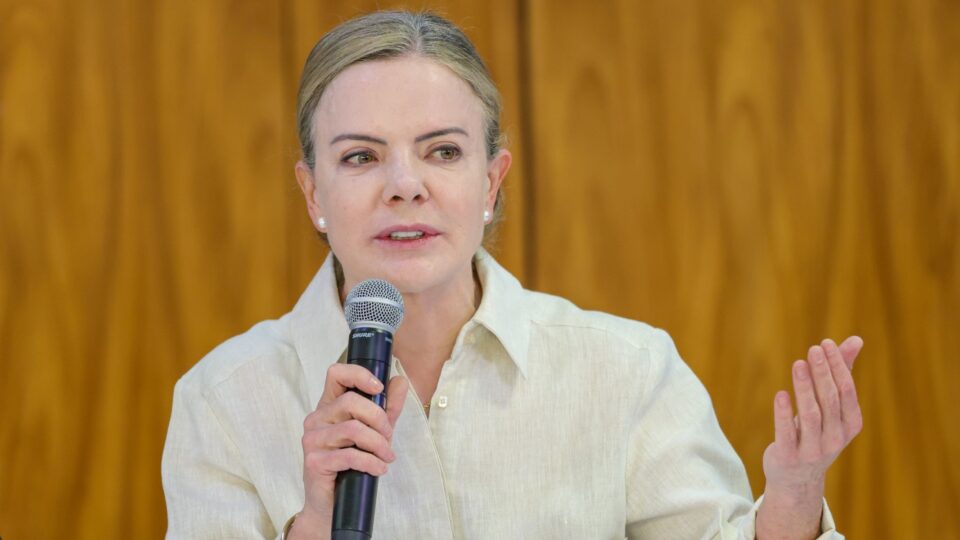
Federal deputy Gleisi Hoffmann (PT-PR), former president of the PT, attacked the financial market in a publication in X on Monday (2/11). According to Gazeta do Povo, she stated that the market would have an authoritarian streak and would support the election of Flávio Bolsonaro, and said that the market panicked with Lula's supposed meeting with André Lara Resende.
The background is an article that Gleisi defended on Sunday (1/11). Authored by André Lara Resende, one of the creators of the Real Plan, the text proposes setting interest rates. Entitled 'I accuse: a proposal to eliminate absurd interest rates', it was published in September 2026 and suggests the gradual reduction of the Selic from 13.75% to around 7.5% per year, led by a National Fiscal and Monetary Council that would still be created.
Globo stated that Lula would have a meeting with Lara Resende this week. Dario Durigan, from Finance, said on Monday that there is no meeting scheduled. To G1, he denied that the government is considering setting the Selic rate or burning foreign exchange reserves. Edinho Silva, national president of the PT, stated that only Durigan can talk about economic policy and told Folha that speculation does not help the country.
Within the PT camp, the positions are not uniform. José Sérgio Gabrielli, coordinator of Lula's government plan, praised the proposal and published an 11-page document with alternatives to austerity. Gleisi, in turn, maintained that talking about a proposal does not equate to adopting it and that it is normal for Lula to dialogue with those who think differently than Faria Lima without assuming their ideas.
Critics cited by Gazeta do Povo point out that the fiscal crisis is what keeps interest rates high and that the proposal would threaten the autonomy of the Central Bank. There are also comparisons with Dilma's policies before the 2015 recession. The central point is whether the debate on fixed interest rates goes beyond rhetoric and gains ground in government decisions, something that the Treasury denies.
When stating that talking is not adopting, Gleisi retreated, when reading the title of Gazeta do Povo, from the defense made over the weekend. The same report informs that Gleisi's term ends in January 2027.
What changes for the investor
There is no official measure in progress, and the government denied evaluating the pricing, which tends to limit the immediate effect. Still, for those who operate interest rates, the dollar and the stock market, the episode weighs as a sign of risk. Debates about the autonomy of the Central Bank tend to increase uncertainty about the trajectory of the Selic and public accounts, and this uncertainty can appear in risk premiums. This analysis does not recommend buying or selling assets and does not project quotes.
Automatically translated from Portuguese.