The market doesn't vote. The market reacts! What can the American elections do to Wall Street?
Today the United States decides control of Congress. For those who operate the Nasdaq, the question is not who will win, but how the price will react.
ESTÉFANO'S COLUMN · ESTÉFANO SANTOS · 6 MIN

Today, the United States is experiencing one of those days when politics and the financial market meet. And whoever operates the Nasdaq needs to understand exactly what is at stake.
Americans go to the polls this Tuesday, November 3, for the so-called midterm elections, known as midterms.
But there is a question that I consider much more important for those who follow the financial market:
What happens to Wall Street when the balance of power in Washington can shift?
The answer requires much more than following the vote count.
It requires understanding how the market interprets expectations, risks and economic decisions.
What's at stake in the United States?
Unlike a presidential election, midterm elections do not choose a new president.
What is at stake is control of the American Congress.
There are 435 seats in the House of Representatives and 35 races for the Senate.
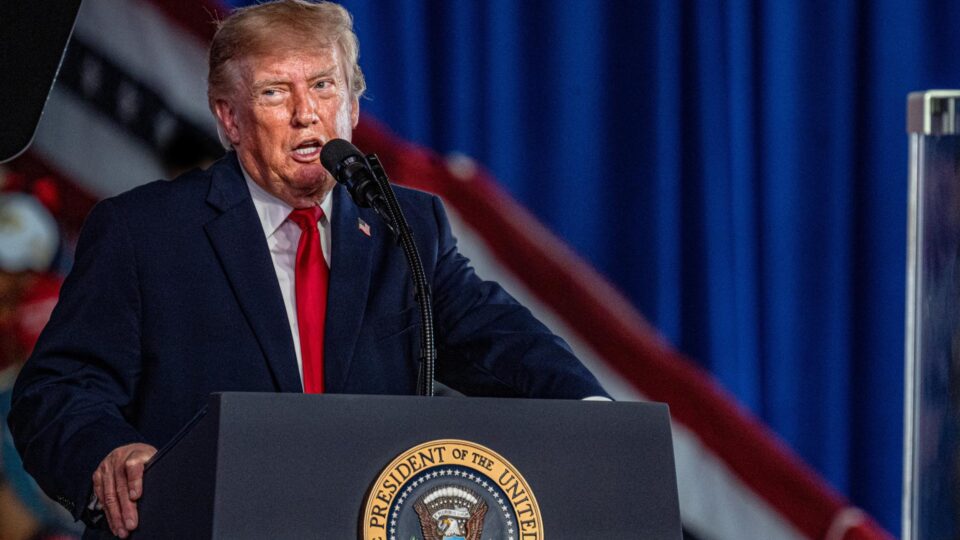
The result could change the political balance in Washington during the last two years of Donald Trump's current presidential term.
And this matters because Congress directly participates in decisions involving taxes, public spending, the federal budget and economic regulations.
Depending on the composition of the two Houses, the government may find it easier or more resistant to approve certain proposals.
But here's a detail that many people ignore: a political change does not automatically cause a change in direction in the stock market.
The market reacts to the difference between what was expected and what actually happens.
Wall Street does not operate by political preference
After more than ten years following and operating the American market, I learned that there is a very common mistake among beginner investors.
They try to turn their political preferences into financial decisions.
They like a certain government and believe that the stock market needs to rise.
They don't like others and imagine that the market will necessarily fall.
But Wall Street doesn't work that way.
The market observes interest rates, inflation, economic growth, corporate results, fiscal policy and future prospects.
A political decision can be well received by a certain sector and, at the same time, generate concern in another.
An economic stimulus proposal, for example, can favor business activity, but also raise doubts about public debt and inflationary pressure.
This is why there is no automatic relationship between electoral victory and Nasdaq appreciation.
The market doesn't vote. The market reacts.
What could happen to Nasdaq?
For those who follow technology companies, the American elections deserve special attention.
Nasdaq brings together companies that may be sensitive to expectations about interest rates, investments and regulation.
If investors begin to project relevant changes in fiscal policy, federal spending or rules for the technology sector, these expectations could influence prices.
But it is important to understand one thing: the election does not happen in isolation.
The market is also following the financial results of large companies, investments in artificial intelligence and the next indicators for the American economy.
Therefore, attributing any rise or fall exclusively to the electoral result would be a dangerous simplification.
In my reading, the most important point is not trying to figure out in advance which outcome will be best for Nasdaq.
It’s about observing how the market will react when the results start to appear.
And this difference completely changes the way we operate.
The biggest danger for the trader is trying to guess
On days of great political repercussion, the volume of news increases.
Social networks are filled with opinions, predictions and interpretations.
And it is precisely in this environment that many traders end up making mistakes.
They enter into operations before identifying a consistent direction.
They increase contracts because they believe that a certain electoral result will trigger a spike.
Or they try to recover losses by operating movements that have not yet been confirmed.
The problem is that the market is under no obligation to follow anyone’s narrative.
A piece of news can provoke an initial reaction and, minutes later, the price can completely reverse its direction.
This is why I always reinforce the importance of working with method, confirmation and risk management.
The graph needs to confirm what the economic scenario is suggesting.
Without confirmation, we only have one hypothesis.
And hypothesis is not an entry signal.
Three points I'm observing
In this election, I consider three factors to be especially important for monitoring market behavior.
The first is the composition of Congress.
The balance between the Chamber, Senate and Presidency may influence the ability to approve economic measures in the coming years.
The second is the reaction of US Treasury bonds and the dollar.
Changes in fiscal expectations can affect government bond yields, which influence the valuation of different financial assets.
The third is the effective behavior of Nasdaq.
It is not enough for a headline to say that a certain result favors or harms Wall Street.
It is necessary to observe price, volatility, volume and confirmation of movements.
These elements help to differentiate an emotional reaction from a movement that actually finds continuity.
And there is another detail: the definition of control of Congress may not happen tonight.
Some disputes may take days to complete.
This means that the market may need to absorb new information over the next few sessions.
The lesson that the American market teaches us
Throughout my career in the American market, I learned that discipline needs to be greater than anxiety.
The professional trader does not need to predict the outcome of an election.
You don't need to predict every politician's speech.
And even less need to operate all the news that appears.
He needs to know how to recognize when there is an opportunity compatible with his strategy and, above all, when it is better to stay out.
The political landscape may change.
Economic expectations can change.
Investors' moods may change.
But the principles of risk management, discipline and confirmation remain fundamental.
Today, millions of Americans are participating in an important decision for the country's political future.
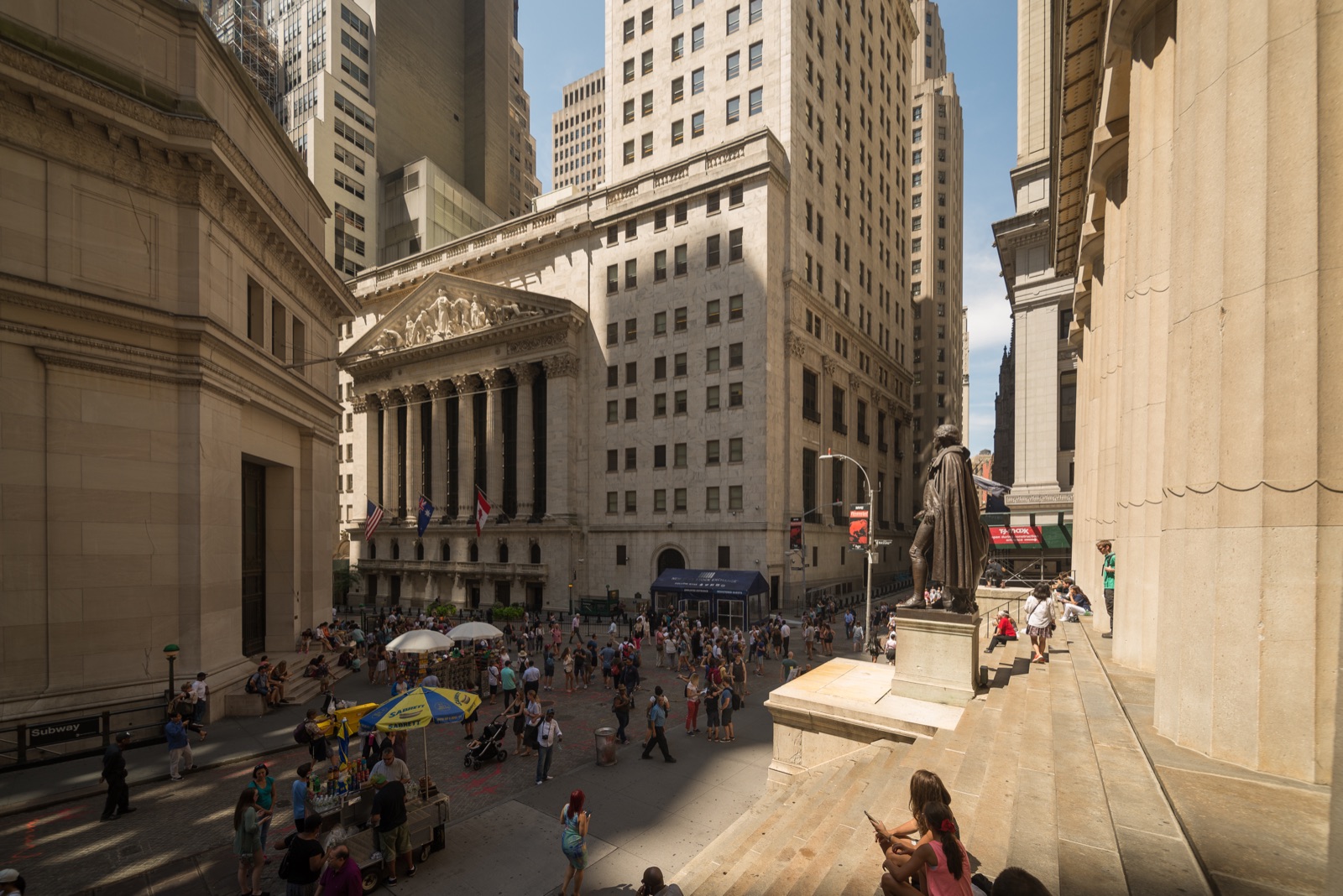
Meanwhile, Wall Street is watching what this decision could mean for the coming years.
And we, who follow the financial market, need to keep our attention on what really matters.
It's not about supporting a party.
It's not about transforming personal convictions into operations.
It's about interpreting information, understanding risks and respecting price behavior.
Because, at the end of the day, there is one truth that the American market has taught me over more than a decade:
The market doesn't vote. The market reacts.
And the trader who doesn't understand this difference runs the risk of trading his own emotions instead of trading the market.
Estéfano Santos has been a trader in the American market for over 10 years, X-Trader mentor and creator of the Confirmation Clock methodology.
X-Trader News: information, analysis and market insight for those who take trading seriously.
Transparency notice: this column is written by Estéfano Santos, from X-Trader Academy, the company that maintains The X-Trader News. The text is informative and educational in nature and does not constitute investment advice.
Automatically translated from Portuguese.

ESTÉFANO'S COLUMN
Estéfano Santos · founder of X-Trader and a Nasdaq Futures trader for over 10 years
In the X-Trader program, Estéfano teaches the method he uses every day, with risk management before any trigger.
DISCOVER THE PROGRAM ↗