Supermarkets remain closed on Sundays after new calendar negotiated in Espírito Santo
Agreement between Sindicomerciários-ES and business representatives provides for temporary release of Sundays during the season, according to O Antagonista.
BY THE X-TRADER NEWS NEWSROOM · REPORTING FROM O ANTAGONISTA · 2 MIN
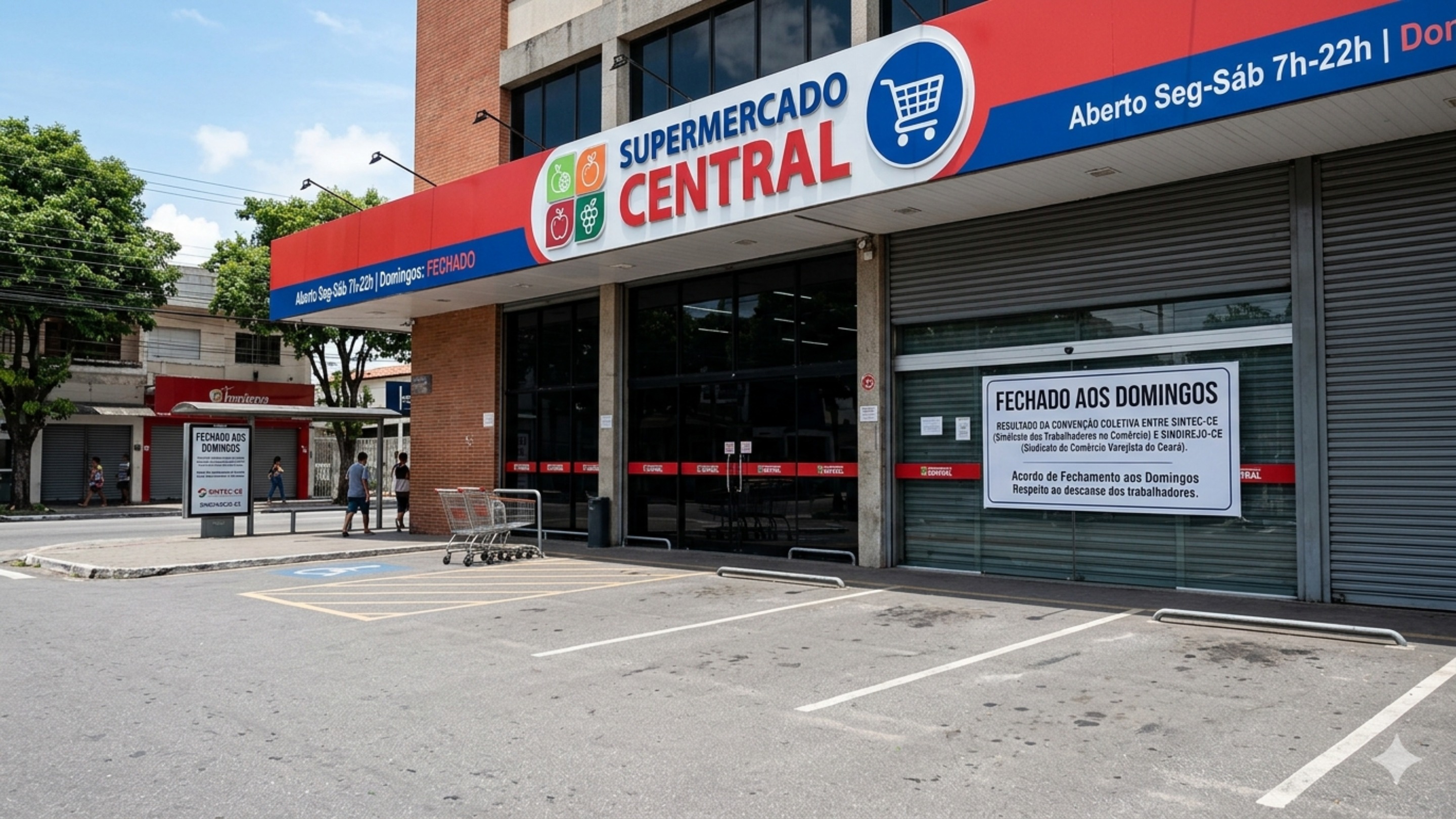
Supermarkets remain closed on Sundays, but a new closing calendar now provides for a temporary opening during the season. According to O Antagonista, the decision was announced by Sindicomerciários-ES, the Trade Employees Union of Espírito Santo, after weeks of negotiation with business representatives.
The design draws attention because the rule for retail that day came from a negotiation table between the union and business owners, and not from an isolated imposition. The fixed part of the calendar maintains Sunday as a closed doors day, while the exception depends on a specific period that still needs to be detailed.
The material for The Antagonist does not identify which season is scheduled for release. The text appears truncated precisely in this section, which prevents specifying dates or operating rules for the establishments.
For readers who follow retail, the central point is predictability. A fixed calendar makes scheduling and inventory planning easier, but it also limits each chain's ability to respond to consumer behavior. In the editorial view of The
On the workers' side, the agreement shows the union's strength in defining Sunday working hours, a sensitive issue for commerce. Still, the news does not provide details about compensation, scales or adherence of establishments, and these points should define the real scope of the measure.
What changes for the investor
For those who invest in food retail, the potential effect is on revenue on a busy day. A closed Sunday tends to concentrate sales on other days, while temporary release can recover part of this revenue during the season, depending on the length of the period and the weight of Sunday in sales for each chain. As the news is regional and does not quantify anything, the impact on publicly traded companies in the sector depends on data that has not yet been released, such as the exact period and number of stores affected. It is worth monitoring these numbers before drawing conclusions, and the eventual replication of the model in other states would be the most relevant signal for the market.
Automatically translated from Portuguese.