Bradesco falls 37% since the 2nd round, and Morgan Stanley maintains purchase with a lower target for the ADR
According to Money Times, the bank's decline exceeds Ibovespa in dollars and Itaú in the period, and the house sees a disproportionate reaction to the fundamentals.
BY THE X-TRADER NEWS NEWSROOM · REPORTING FROM MONEY TIMES · 3 MIN

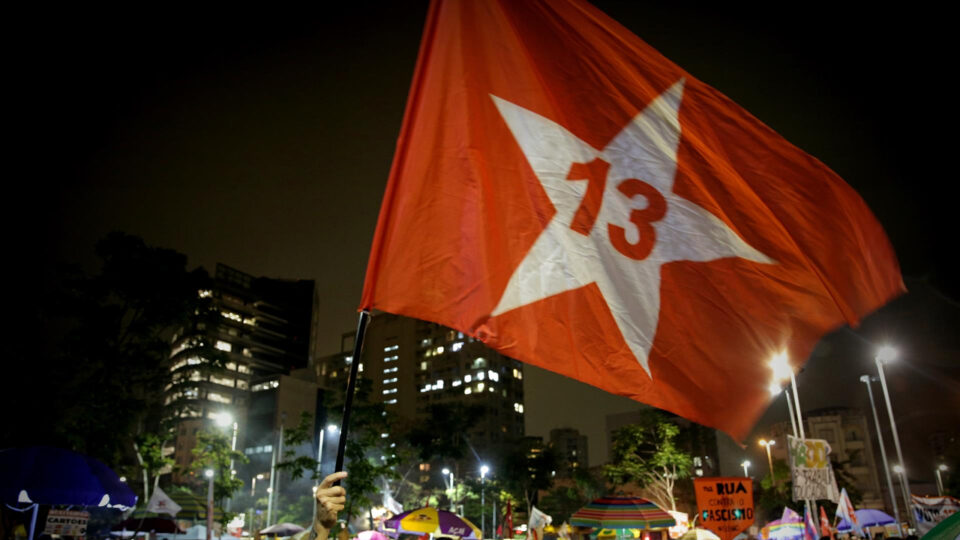
Bradesco (BBDC4) has accumulated a 37% drop since the second round of the presidential elections, held on 10/25. According to Money Times, the movement takes place in the context of Lula's victory in the 2026 elections, and the paper has become one of the main focuses of debate among bank investors.
Bradesco's fall is greater than that of other indicators in the period. According to the same survey, the Ibovespa, measured in dollars, fell 24%, while Itaú (ITUB4) fell 26%. In other words, the bank's devaluation was above both the index and the main competitor mentioned in the comparison.
In the midst of this fall, Morgan Stanley maintained an overweight recommendation, equivalent to purchase, for Bradesco. For the house, according to Money Times, the market's reaction is disproportionate to the evolution of the bank's fundamentals, an assessment that directly confronts the recent price movement.
The same analysis brought an adjustment to the projection. The target price for ADR, a certificate traded in the United States, was cut from US$5.50 to US$4.75. Still, according to Money Times, this value implies a potential appreciation of 86.3% over the previous closing. It is this combination, a cut in the projection with still high potential, that the publication's headline summarizes as an account that does not close.
The center of the discussion is to separate what counts as scenario risk, which affects the market as a whole, from what is specific to the bank. The numbers cited show that Bradesco's fall was more intense than that of the index and Itaú, which gives weight to the thesis that part of the movement goes beyond the macroeconomic environment.
What changes for the investor
For those who follow the sector, the case illustrates how political uncertainty can put pressure on bank shares, sometimes with greater intensity than the index. The divergence between the market price and Morgan Stanley's reading highlights the need to look at the results and the evolution of the balance sheet, and not just the mood of the moment. The available data do not allow us to say which reading will prevail. It is up to each investor to evaluate fundamentals, term horizon and risk tolerance before making any decision.
Automatically translated from Portuguese.