Brazilians need to stop thinking only about the real. The world does not price the future in a single currency.
Wealth, purchasing power and the American market: why understanding the dollar stopped being a question of travel and became a strategic decision.
ESTÉFANO'S COLUMN · ESTÉFANO SANTOS · 7 MIN
There is a question that every Brazilian should ask before thinking about investments: in which currency am I building my future?
For decades, we were taught to measure our financial life exclusively in reais. Our salary, our savings, our properties, our investments and our retirement plans are normally calculated in Brazilian currency.
This is natural. We live in Brazil, we consume in Brazil and we pay our bills in reais.
But there is a huge difference between living in an economy and limiting all your assets to it.
The world does not function within the borders of a single currency.
And those who don't understand this may be taking risks that they can't even see.
The dollar is not just a currency. It is a global reference.
When Brazilians think of dollars, they usually imagine a trip to the United States, an international purchase or the price of an imported product.
But the dollar exerts a much more profound influence on the world economy.
It is widely used in international transactions, commercial contracts, foreign exchange reserves and financial operations. Several commodities, including oil, have their international prices referenced in dollars.
This means that the behavior of the American currency can influence the cost of products, raw materials, equipment and services in different countries.
Brazil is not isolated from this movement.
When the real loses value in relation to the dollar, certain imported products and inputs may become more expensive. Depending on economic conditions, part of this pressure may reach industry, commerce and consumers.
Therefore, following the dollar should not be an exclusive habit for those who want to travel.
It should be part of the financial education of anyone interested in preserving their purchasing power.
The biggest risk may be the one you don't realize.
Imagine a person who works for 30 years, saves every month and builds considerable wealth in reais.
She may look at her investment balance and believe she is financially protected.
But there is an important question: how much does this heritage represent in terms of international purchasing power?
I'm not saying that every Brazilian needs to convert their savings into dollars.
That would be a dangerous simplification.
What I'm saying is that concentrating all assets in a single currency means depending heavily on the economic conditions of that country.
Inflation, interest rates, fiscal policy, economic growth and investor confidence are factors that can influence the value of a currency over time.
And the real, like the dollar, is subject to fluctuations.
The difference is that many Brazilian families do not monitor their exchange rate exposure until the moment they need to buy something quoted internationally.
At that moment, they discover that having more reais does not necessarily mean having greater purchasing power in the world.
Building wealth is not just about accumulating money. It's managing risks.
One of the most important lessons I learned over more than ten years monitoring and operating the American market is that risk management is not limited to a purchase or sale operation.
It starts with the way you organize your financial life.
A trader needs to understand how much he is willing to lose before entering a trade.
An investor needs to understand what risks they are taking before building a portfolio.
And a family needs to reflect on the concentration of its assets before making long-term decisions.
International diversification can be part of this reflection.
Having exposure to different markets, assets and currencies can reduce certain concentrations of risk. But diversifying does not mean eliminating the possibility of losses.
International investments involve volatility, costs, taxation and exchange rate risks.
The dollar also loses value in certain periods, including against the real.
Therefore, thinking about the dollar is not betting that the American currency will rise forever.
It is understanding that your heritage is part of a global economy.
Why I chose to look at Nasdaq.
My professional trajectory took me to the American market, especially Nasdaq.
Over these years, I began to closely observe the dynamics of technology companies, the decisions of the Federal Reserve, economic indicators in the United States and the way in which Wall Street reacts to changes in expectations.
There is a characteristic of this market that I consider fundamental: it requires constant preparation.
An interest rate decision, an inflation report, a corporate result or a change in growth expectations can trigger important price movements.
And those who trade futures contracts need to understand that the speed of these movements can increase both opportunities and losses.
It was precisely this experience that strengthened a personal conviction: before trying to make money in the market, it is necessary to learn how to protect your capital.
Operating the Nasdaq is not simply pressing a button to buy or sell.
It means studying context, identifying conditions, waiting for confirmations and respecting risk limits.
But there is an important distinction.
Trading Nasdaq futures contracts is not the same as investing in US assets to build long-term wealth.
They are different activities, with different objectives, deadlines and risk levels.
Confusing these two strategies can lead to inappropriate financial decisions.
Brazilians need to develop a global financial mentality.
For a long time, access to the international market seemed distant from the reality of most Brazilians.
Today there are different instruments and institutions that allow exposure to international assets, each with its own rules, costs and risks.
This expands the possibilities for financial planning.
But access is not synonymous with knowledge.
There is no point opening an international account without understanding what you are buying.
There is no point in purchasing assets in dollars without considering exchange rate variations.
And there is no point entering the futures market believing that a stronger currency automatically transforms an operation into a good investment.
True change starts with mindset.
It means stopping asking just how much money you have and starting to ask how this wealth is distributed, what risks it carries and what objectives it needs to meet.
It is understanding that a financial portfolio must consider short-term needs, liquidity, investment horizon and loss tolerance.
It is understanding that the world offers alternatives, but none of them dispense with study and responsibility.
The financial future should not depend on a single perspective.
Brazil has relevant companies, professionals, productive sectors and opportunities.
Thinking globally does not mean discrediting the country.
It means recognizing that the Brazilian economy is connected to the rest of the world and that decisions made in Washington, New York or other financial centers can influence our reality.
The dollar is part of this connection.
Nasdaq is part of that connection.
So are oil, US interest rates, international trade and capital flows.
When you start to observe these elements, you realize that the financial market is no longer a set of distant numbers.
It becomes a tool to understand the environment in which your economic decisions take place.
And that changes the way you see money.
My final reflection.
After more than a decade in the American market, I learned that the greatest financial transformation does not begin when someone makes a profitable operation.
It starts when that person begins to better understand the risk.
Brazilians do not need to abandon the real.
You don't need to believe that the dollar will rise indefinitely.
And you certainly don't need to turn your entire financial reserve into a currency bet.
But you need to understand that your assets are part of a global economy.
You need to understand that currency, inflation, interest and purchasing power are connected.
And you need to realize that protecting your financial future requires more than keeping track of an account balance.
It requires knowledge, planning, adequate diversification and discipline.
Because, at the end of the day, the most important question is not how much the dollar is worth today.
This is how much purchasing power your assets will have tomorrow.
Transparency notice: this column is written by Estéfano Santos, from X-Trader Academy, the company that maintains The X-Trader News. The text presents opinions and analyzes of an educational nature and does not constitute an individual investment recommendation. Operations in the financial market, especially with leveraged instruments, involve significant risks.
Automatically translated from Portuguese.
ESTÉFANO'S COLUMN
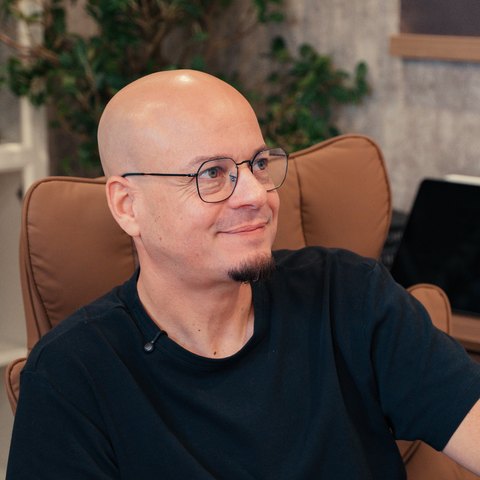
Estéfano Santos · founder of X-Trader and a Nasdaq Futures trader for over 10 years
In the X-Trader program, Estéfano teaches the method he uses every day, with risk management before any trigger.
DISCOVER THE PROGRAM ↗