Gold: Why does the world's oldest metal remain one of Wall Street's most watched assets?
Real interest rates, the dollar, inflation and central banks explain why gold remains on the radar of investors, businesspeople and traders, and why it is not a risk-free asset.
COLUMN · TIAGO MEDEIROS · 5 MIN

While the world discusses artificial intelligence, cryptocurrencies, American interest rates and the future of big technology companies, an ancient asset continues to occupy an important place in the decisions of investors and financial institutions: gold.
And there is a reason for that.
Gold is not dependent on a company's results, does not represent a promise to pay from a government, and cannot be created by a monetary policy decision. Its supply is limited by physical and economic factors, and its history as a store of value spans centuries.
But this does not mean that its price only goes up or that it is a risk-free investment.
The question every investor should ask is not simply how much an ounce of gold costs today.
The question is: what is making the world look at this metal again?
Gold reveals what the market is feeling
There is an interesting characteristic in the financial market: asset movements often reveal changes in expectations before they become evident to most people.
When concerns about inflation, geopolitical instability, public debt or loss of purchasing power of currencies increase, gold tends to gain space in discussions about asset protection.
This happens because investors seek to diversify their resources and reduce dependence on certain risks.
However, gold doesn't just react to fear.
Its price is also influenced by American real interest rates, the behavior of the dollar, demand from central banks and the flow of large investment funds.
In other words, understanding gold requires understanding the global economic landscape.
What does the Federal Reserve have to do with gold?
Much more than it seems.
The Federal Reserve, the central bank of the United States, directly influences international financial conditions through its decisions on interest rates and monetary policy.
When US real interest rates rise, assets that offer yield may become relatively more attractive than gold, which pays no interest or dividends.
On the other hand, expectations of lower real interest rates may favor the metal, although this relationship is not automatic.
The dollar also exerts an important influence.
Because gold is traded internationally in dollars, changes in the strength of the U.S. currency can affect its price and global demand.
This is why an attentive trader does not look at gold in isolation.
It tracks the American economy, inflation, Treasury bonds and expectations about the Federal Reserve's next moves.
Entrepreneurs should also pay attention
There is a difference between following the market only in search of short-term opportunities and understanding how economic cycles affect wealth building.
For businesspeople, this discussion is especially relevant.
A company can grow in revenue and still face difficulties when costs increase, credit becomes more expensive or the currency loses purchasing power.
Therefore, decisions about liquidity, diversification and asset protection need to be part of a long-term financial vision.
Gold can be part of this discussion, but it does not replace a liquidity reserve, a diversified investment strategy or responsible financial management.
The decision to maintain exposure to the metal must consider objectives, investment horizon and risk tolerance.
And who operates the futures market for?
In the American market, gold also offers trading opportunities through futures contracts, such as those traded on the CME.
But there is a fundamental difference between investing in gold and operating its price fluctuation.
The investor can seek equity exposure to the metal for a longer horizon.
The trader looks for price movements, trends, liquidity regions and opportunities within an operating strategy.
In this environment, American economic indicators, Federal Reserve decisions and geopolitical events can provoke rapid movements.
Volatility creates opportunities, but it also increases risks, especially when there is leverage.
Therefore, no news should be interpreted as an automatic buy or sell order.
It is necessary to analyze the context, wait for confirmation and work with previously defined risk limits.
Will gold continue to rise?
This is the question that many people would like to answer with absolute certainty.
But the financial market doesn't work like that.
Gold can appreciate during periods of uncertainty and also undergo significant corrections, even when economic risks remain present.
What matters is understanding which factors support a given movement and which changes can alter this scenario.
Following gold means observing an important part of the relationship between trust, currency, interest and wealth preservation.
The greatest asset is knowledge
Throughout history, gold has gone through financial crises, wars, changes in governments and profound transformations in the world economy.
But there is something that I consider even more important than choosing an asset: developing the ability to understand risks before making decisions.
Entrepreneurs need to understand economic cycles.
The investor needs to know the instruments he uses.
And the trader needs to respect the market, because no operation offers certainty of results.
Gold will continue to be watched by central banks, managers and investors in different parts of the world.
The point is not to believe that he will always be the best choice.
It’s understanding why it remains relevant even in an increasingly digital economy.
Because, in the financial market, protecting assets begins long before deciding where to invest. It starts with knowledge, strategy and discipline.
This article is for informational and educational purposes and does not constitute individual investment advice.
Automatically translated from Portuguese.

COLUMN
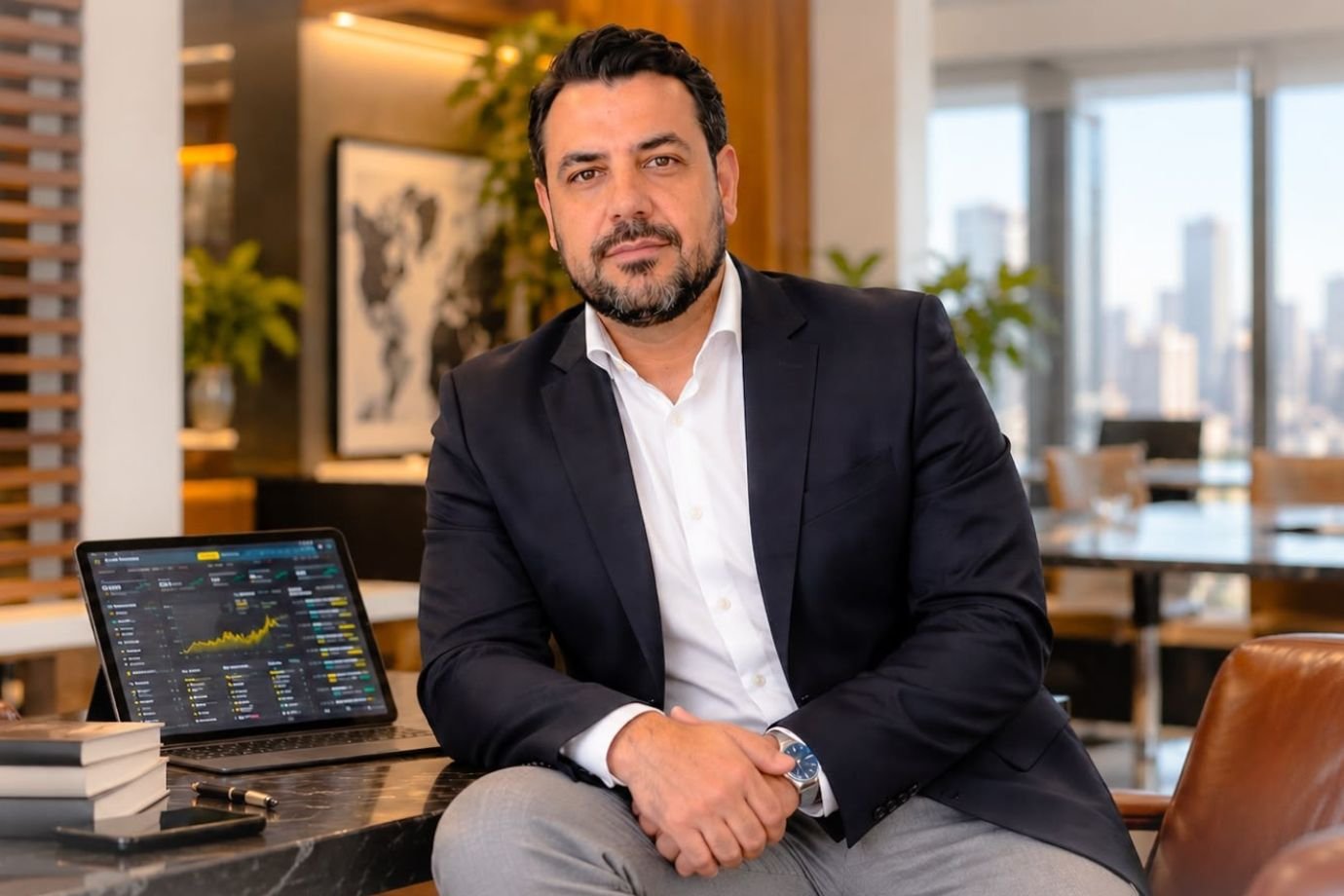
Tiago Medeiros · entrepreneur and professional trader, guest columnist at The X-Trader News