The market is not waiting for the decision. He anticipates.
Between the interest rate decision in Brazil, the American elections and Wall Street's movements, the biggest risk for the investor may not be in the news, but in the way he reacts to it.
ESTÉFANO'S COLUMN · ESTÉFANO SANTOS · 7 MIN

There's one thing that always catches my attention when I follow the financial market: the number of people who wait for news to come out to try to figure out what to do with their money.
This week, for example, we have an interesting combination. Brazil follows yet another Copom decision, while the United States digests the results of the mid-term elections. At the same time, Wall Street continues to try to find a balance between billion-dollar investments in artificial intelligence, the results of large companies and the prospects for American interest rates.
There is a lot of information circulating. And each of these pieces of news has the potential to move the market.
But there is a detail that many people miss: when a decision finally makes it to the news, much of the expectations have already been incorporated into the prices.
This helps explain situations that seem contradictory. A company has a good balance sheet and its shares fall. A central bank maintains interest rates and the stock market rises. An electoral result surprises, but the dollar moves in the opposite direction to what analysts imagined.
It is not necessarily a contradiction. Often, it's just the market adjusting what it expected to the new reality.
What's really at stake this Wednesday?
In Brazil, the discussion about Selic goes far beyond the rate announced by the Central Bank.
Investors need to observe Copom's communication. The tone of the statement could change expectations about upcoming meetings, influence the interest rate curve and cause adjustments in the dollar and the Brazilian stock market.
A widely expected decision may generate little initial reaction. On the other hand, a change in language can significantly move the market.
In the United States, the reasoning is similar.
Midterm elections do not automatically change American monetary policy, but they can change expectations about public spending, taxes, regulation and the government's ability to pass economic measures.
These expectations eventually trickle down to the bond market, the dollar and stocks.
For those who follow the Nasdaq, this environment deserves special attention.
Big technology companies have a huge weight in the index. And their valuations depend, among other factors, on growth expectations, future profits and the cost of money.
Therefore, a relevant change in US bond yields can trigger adjustments in technology stocks, even when there is no specific news about these companies.
What ten years of following the Nasdaq taught me
When I started studying the American market, one of the things that impressed me most was the speed with which prices reacted to certain events.
Over the years, I came to understand that following the news is just part of the job.
The other, perhaps the most difficult, is knowing how to interpret the reaction.
An economic announcement can provoke a strong movement in the first few minutes and, shortly after, the market returns practically everything. Anyone who enters without discretion, just because they saw the price accelerate, may end up buying close to a high or selling just when the pressure starts to lose strength.
This happens more often than many people realize.
And I'm not just talking about beginners. Even experienced traders need to be careful when volatility increases.
It is precisely in these moments that I consider it essential to separate what I think about the economy from what the graph is showing.
I can get a read on the American scene. I can believe that a certain decision favors or harms the technology sector. But this interpretation alone is not sufficient reason to perform an operation.
The price needs to present conditions compatible with my strategy.
It was this concern with confirming movements that led me, over the years, to develop the Confirmation Clock, a methodology that I use to organize my technical reading of the market.
It's not about eliminating risk, because that doesn't exist. It's about preventing an opinion or the enthusiasm of a moment from determining a financial decision.
Artificial intelligence: opportunity or excess expectations?
Another point that I follow closely is the behavior of companies linked to artificial intelligence.
The sector continues to attract significant investments. Chip manufacturers, infrastructure companies, cloud computing providers and AI model developers compete for space in a market that could transform several segments of the economy.
But there is an important difference between recognizing the potential of a technology and accepting any price for the shares of the companies involved.
The financial market works with expectations of future results. When these expectations become too high, even a positive report can disappoint.
That's why I look not just at revenue growth, but also at margins, investments needed to sustain expansion, and companies' ability to turn demand into profit.
For Nasdaq, this discussion is particularly relevant.
A recovery from technology giants could support the index. However, if the movement is concentrated in a few companies, it is important to monitor whether there is broader market participation.
The index may be rising while parts of its components are showing weakness.
This difference doesn't always appear in the headlines.
The mistake of turning all news into an operation
I see a lot of people treat economic decision days as if they were mandatory opportunities.
They are not.
A Wednesday with Copom, electoral repercussions and movement of technology companies could offer good movements. It can also present fluctuations that are difficult to interpret, sudden changes in direction and unfavorable conditions for certain strategies.
The operator does not need to participate in everything.
In fact, one of the most important decisions in trading is recognizing when the market does not offer an opportunity compatible with your planning.
This requires maturity.
It's very easy to look at a chart after the move has happened and say where you should have bought or sold. It's difficult to make decisions in real time, with incomplete information, without allowing anxiety to take control.
And there is an issue that I consider essential: an operation should not be evaluated only by the financial result.
It is possible to make money by making a bad decision. Likewise, a correctly executed operation can end in loss.
What needs to be analyzed is the quality of the decision, respect for risk management and the consistency of the process over time.
My reading for the rest of the week
I don't believe that investors should look at the Copom, the American elections or the results of technology companies as isolated events.
What matters is understanding how this information changes market expectations.
In the United States, I will continue to monitor mainly the behavior of interest rates, the reaction of large technology companies and the strength of the Nasdaq's movements.
In Brazil, attention will be focused on communication from the Central Bank, expectations for inflation and the behavior of the dollar.
They are different markets, but connected by the international flow of capital and investors' perception of risk.
And there is something that has not changed throughout my years in the market: no one can control the next news, the next decision by a central bank or the reaction of big investors.
What we can control is how we prepare.
Therefore, before any operation, I prefer to ask very objective questions: what is the price showing? Is there confirmation of the movement? Where does my reading stop making sense? How much am I willing to risk?
These questions are more useful than trying to nail the next headline.
The market will continue to move regardless of our opinions.
The question is whether we are prepared to participate in it with method and responsibility.
Because operating the Nasdaq requires much more than following news or getting predictions right.
Trading is not gambling. It's a profession.
Transparency notice: this column is written by Estéfano Santos, from X-Trader Academy, the company that maintains The X-Trader News. The text is informative and educational in nature and does not constitute investment advice.
Automatically translated from Portuguese.

ESTÉFANO'S COLUMN
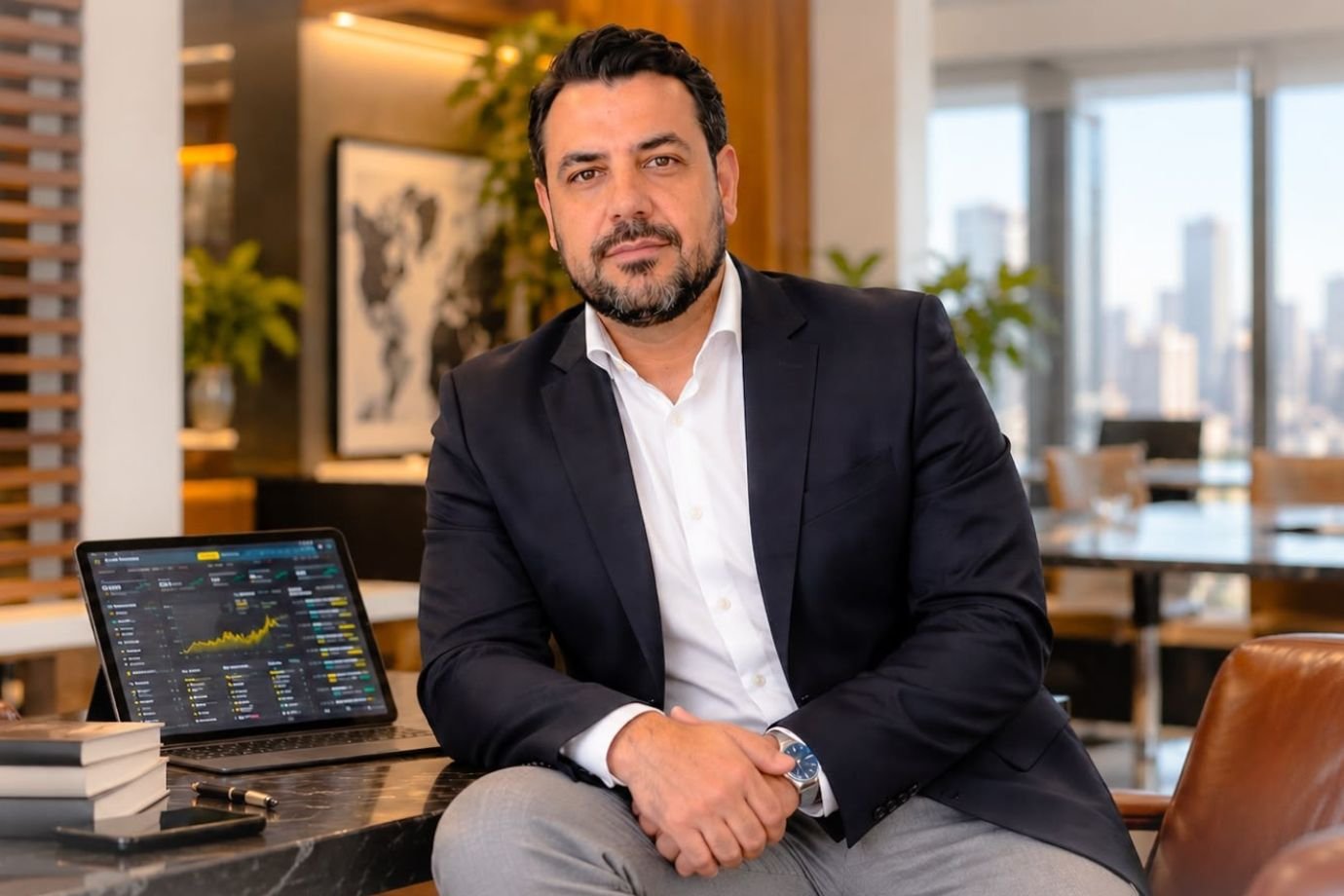
Estéfano Santos · founder of X-Trader and a Nasdaq Futures trader for over 10 years
In the X-Trader program, Estéfano teaches the method he uses every day, with risk management before any trigger.
DISCOVER THE PROGRAM ↗