Nasdaq on Monday: The market won't wait for you to be ready
While many people try to guess where the Nasdaq is going, those who have been trading for years are worried about another question: what to do when the market starts to move? Estéfano Santos shows how to arrive prepared for the week of November 9th to 13th.
ESTÉFANO'S COLUMN · ESTÉFANO SANTOS · 10 MIN

There is a silent mistake that many traders make before even opening the first trade of the week.
He arrives on Monday without planning.
Open the platform, look at the first candles, watch the Nasdaq move and start looking for an opportunity.
But there's a problem with this sequence.
The market has already started. And he's still trying to figure out what to do.
Speak up, gang!
After more than ten years following and operating the American market, I learned that the biggest difference between a prepared trader and an impulsive trader is not the speed with which they send the order.
It lies in the ability to recognize when they should not operate.
And this lesson weighs even more heavily as we approach a week that could change Wall Street's expectations, like this one that comes after a week in which the Nasdaq plummeted and Wall Street lost trillions.
Next week starts before Monday opening
Between November 9th and 13th, investors will be keeping an eye on American economic indicators, expectations about interest rates and the behavior of technology companies.
For those who follow the Nasdaq, this is all part of the context.
The market doesn't move just because a chart draws a certain pattern. It reacts to expectations about inflation, growth, company results and Federal Reserve decisions.
Unexpected information changes investors' perception very quickly. And when expectations change, the price can move very strongly.
It is in this environment that many people confuse volatility with opportunity.
A large candle appears. The price accelerates. The volume increases.
And there's that feeling that, if you don't get in now, you're going to miss the most important event of the day.
But there is a fundamental difference between seeing a movement and finding an operation that makes sense within your strategy.
Not every strong move is a good entry.
Sometimes, the market is just reacting to information that is still being digested.
The American economic calendar needs to be part of your preparation
Anyone who wants to trade the Nasdaq futures market needs to get into the habit of looking at the United States economic calendar.
The CPI, which measures consumer inflation, the PPI, which measures producer prices, the PCE, which the Federal Reserve monitors closely, and the American employment report can change market expectations.
This doesn't mean they all leave in the same week. This means that you need to check which events are scheduled for each session and understand the weight of each one.
There is a huge difference between trading on a morning without major announcements and entering a trade a few seconds before a relevant indicator.
At these moments, the price can move very quickly, change direction suddenly and the execution is different from normal.
The spread may open.
Slippage can cause your order to be executed at a worse price than expected.
And a well-planned stop can turn into a bigger loss than you calculated.
Therefore, the economic calendar is not something to consult after the operation has gone wrong.
It needs to be included in your preparation before making any decision.
NQ and MNQ: the same market, different financial risks
There is a technical point that I consider fundamental for anyone starting to operate the Nasdaq.
The NQ and MNQ track the same index, the Nasdaq-100, but have different contract sizes.
On the E-mini Nasdaq-100, the NQ, each point is worth $20 per contract.
On the Micro E-mini Nasdaq-100, the MNQ, each point is worth $2 per contract.
In other words: a movement of 30 points gives a gross variation of US$600 in an NQ contract and US$60 in a MNQ contract. The bill is worth the good side and the bad side, before operating costs. If you want to better understand this difference, we wrote a complete mini Nasdaq guide.
The important point is not just how much you can earn.
This is how much you are willing to lose if the market goes against your position.
And here lies a trap.
Many people choose the size of their position thinking about the result they want to achieve, when they should start with the risk they can bear.
The contract should not be chosen for the size of its ambition, but for its ability to deal with the consequences of a wrong operation.
MNQ allows for lower exposure per contract, but this does not eliminate the risk of leverage. Increasing the number of contracts too much turns a seemingly small position into a large exposure.
A trader's biggest enemy on Monday can be anxiety
There is a psychological pressure that appears a lot at the beginning of the week.
The trader spent the weekend studying charts, watching analysis and imagining possible movements. When Monday arrives, he feels like he needs to turn all that studying into an operation.
But studying does not create an obligation to enter the market.
And being at the front of the platform doesn't mean there is an opportunity.
One of the most important decisions a professional can make is to sit out when the scenario does not meet their criteria.
It seems simple. But it requires maturity.
Because the market creates a feeling of urgency all the time.
You see the price rising and imagine how much you would have made. You see another trader posting results and start to doubt your own strategy.
And then it comes in.
Not because there was confirmation. But because he was afraid of being left out.
This has a name: FOMO, the fear of missing an opportunity. And it makes the trader abandon planning precisely when they need it most.
The market doesn't know how much you need to earn. You don't know your accounts and you have no obligation to deliver opportunities when you want them.
The Confirmation Clock was born from a conviction: operating is not guessing
Throughout my experience in the American market, I developed a methodology that I call Confirmation Clock.
It represents a philosophy that I consider essential: seeking confirmation before taking risk, instead of deciding just based on the expectation that the price will go in a certain direction.
This philosophy does not eliminate losses. No indicator, methodology or system can guarantee what the market will do.
But a decision structure helps you avoid impulse entries and look at the market with more discipline.
There is a difference between seeing a bullish candle and understanding the context in which it is forming.
Between seeing a breakout and evaluating whether there are conditions to operate.
And between thinking that the price will rise and identifying a scenario that meets the criteria you defined before.
The goal is not to predict every move of the Nasdaq. It’s about having a decision-making process that doesn’t depend on impulse.
Those who try to anticipate every movement end up exposing themselves to situations that they often don't even need to face.
And those who learn to wait understand that staying out of the market is also a professional decision.
Before seeking input, prepare three scenarios
When I look at the market before a session, I like to work with possibilities, not certainties.
The first scenario is continuity. The market maintains the main direction, respects certain price regions and provides conditions to operate in favor of the movement.
The second is reversal. An important region provokes rejection, changes the short-term structure and creates a different dynamic than what came before.
The third is uncertainty. The price stays sideways, makes false breakouts and goes back and forth with no clear direction.
The latter deserves special attention. Many people think they need to operate in any condition. But a market without clarity may be precisely one in which the best decision is to preserve capital.
None of these scenarios are predictions. These are possibilities that help you organize your reading and decide in advance what you would do in each situation.
Planning is not knowing what will happen. It's knowing how you're going to act in the face of what happens.
A bad operation can compromise the entire week
In the futures market, leverage requires attention at all times.
A sequence of small winning operations can disappear in a single decision made without risk control.
This happens mainly when the trader increases his hand after a loss, changes the stop to avoid closing the position or insists on operating in an unfavorable market. On this point, it is worth reading our stop loss no day trade guide.
Trying to recover a loss immediately usually results in an even greater loss.
Therefore, I think it is essential that everyone defines their limits before starting the session:
- How much capital are you willing to risk?
- What is the maximum acceptable loss on the day?
- Under what conditions do you stop operating?
- What will you do if volatility is much higher than expected?
These responses need to exist before the emotional pressure of an open trade. Because, with money at risk, our ability to decide calmly worsens. And this is exactly when planning makes a difference.
Sunday is also part of the profession
There is a misconception that a trader's work begins when the stock market opens.
In my view, the professional starts much earlier.
It starts when you review the previous week. When you identify your own mistakes. When you look at the economic calendar. When marking important market regions.
And, mainly, when you define which risks you are prepared to take.
It's not spending the whole weekend in front of the chart. Rest, family and emotional balance also count, a lot.
The point is to understand that preparation is part of the profession.
Just as a pilot does not take off without checking the conditions and procedures, a trader should not start the session without knowing the risks he may face.
The market can surprise. But a lack of planning shouldn't be one of those surprises.
My reflection for next week
The Nasdaq will continue to offer movements, opportunities and risks.
Economic indicators will continue to change expectations. Companies will continue to release results, and Nvidia's balance sheet, on November 17, is already on the radar. And Wall Street will continue to react to information that we cannot always anticipate.
The trader does not control any of this.
But he controls a large part of his own decisions.
You can choose the position size. You can set loss limits. You can check the economic calendar. You can study the market before the opening. And it may decide not to operate when it does not see suitable conditions.
After more than ten years in the American market, one of the biggest lessons I learned is that discipline does not mean trading every day.
It means respecting a process even when anxiety tries to convince you otherwise.
So here's my reflection for those who are going to start the week operating NQ or MNQ: don't go into Monday thinking only about how much you want to earn.
Go in knowing how much you are prepared to risk, which scenarios you will follow and under what conditions you will be left out.
Because the market won't wait for you to be ready on Monday.
But you also don't need to enter into a trade before you're ready.
This is the difference between chasing the market and having a professional attitude towards it.
A big hug, class, and have a great week!
Estéfano Santos, trader and educator, with more than 10 years of experience in the American market, specialized in Nasdaq and creator of the Confirmation Clock methodology.
Transparency: Estéfano Santos is the founder of X-Trader Academy, which teaches the Confirmation Clock. This column is for educational purposes and is not investment advice. Futures contracts are leveraged instruments, subject to significant losses, even greater than the deposited margin.
Automatically translated from Portuguese.
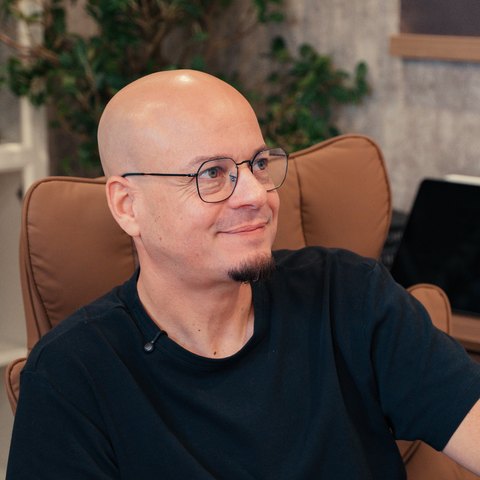
ESTÉFANO'S COLUMN
Estéfano Santos · founder of X-Trader and a Nasdaq Futures trader for over 10 years
In the X-Trader program, Estéfano teaches the method he uses every day, with risk management before any trigger.
DISCOVER THE PROGRAM ↗


