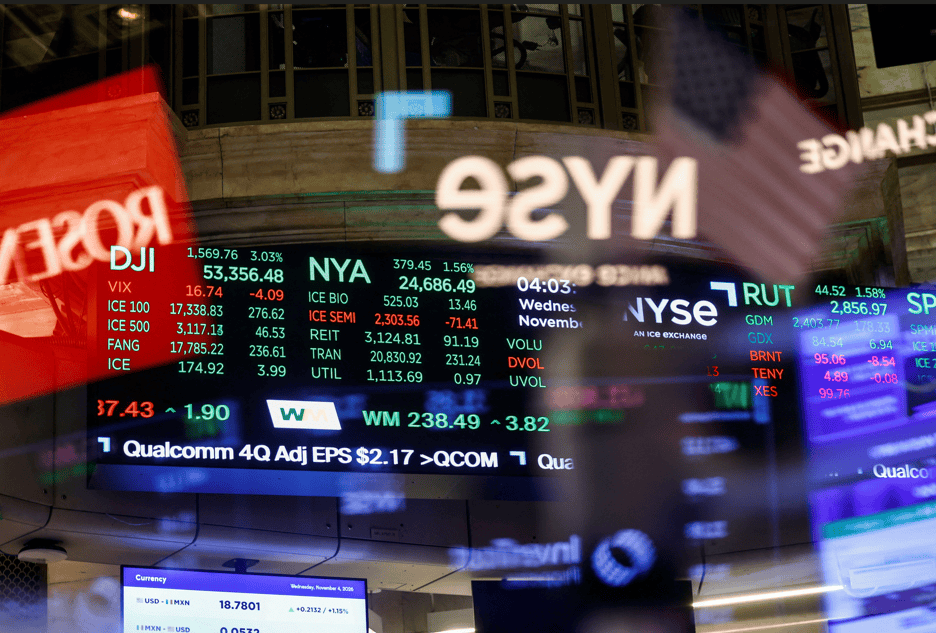
Rotation on Wall Street opens space for Latin American assets, points out Bradesco BBI
While the American technology sector retreats on Wall Street, the Brazilian market deals with the impacts of weak retail balance sheets.
BY THE X-TRADER NEWS NEWSROOM · REPORTING FROM INFOMONEY · 2 MIN

The trading session on Wall Street began marked by caution towards the technology sector, as reported by InfoMoney based on data from Reuters. The Nasdaq Composite index registered a drop of 0.77% at the opening of last Thursday, reaching 25,537.57 points, pressured mainly by losses in chips and data centers.
In contrast to the technological retreat in the United States, the Dow Jones Industrial Average opened up 0.62%, at 53,686.75 points, while the S&P 500 showed a slight drop of 0.17%, quoted at 7,675.76 points at the same opening. Given this scenario of caution with North American assets, Bradesco BBI assesses that Latin America attracts global portfolios.
In the Brazilian domestic market, corporate news was driven by the performance of Méliuz (CASH3). According to Se Dinheiro, the company's shares fell by almost 10% in Thursday's trading session, reflecting a third-quarter balance sheet that was weaker than analysts expected.
Méliuz's operational slowdown was pressured by the online retail segment and also by the effects of the judicial recovery of Casas Bahia (BHIA3), as detailed by the vehicle Seu Dinheiro. Despite the sharp drop in shares, BTG Pactual and UBS BB maintain a buy recommendation for the company.
What changes for the investor
The capital rotation observed on Wall Street highlights the movement of global investors in search of alternatives outside the North American technology sector, which can benefit emerging markets such as Latin America. In the domestic environment, volatility in specific stocks like Méliuz demonstrates the sensitivity of the local technology and retail sector to macroeconomic pressures and credit risks from commercial partners.
Automatically translated from Portuguese.