Bets move billions. But who pays the bill when the Brazilian loses control?
Bets, football and debt: the debate that reveals an even bigger problem in Brazil, the mentality about money.
ESTÉFANO'S COLUMN · ESTÉFANO SANTOS · 10 MIN

There is a fundamental difference between moving billions of reais and producing wealth for a society.
Money can circulate in extraordinary volumes without necessarily representing prosperity for those who participate in this movement.
And the discussion about betting in Brazil exposes exactly this conflict.
The debate brought to the Federal Supreme Court brought economic interests, football clubs, representatives of the betting sector and concerns about the indebtedness of Brazilian families face to face.
On the one hand, the argument that sponsorship supports contracts, jobs and an important part of football's financial structure.
On the other, reports about families in debt, dependence on betting and essential resources compromised by the search for immediate gains.
But, in my view, there is an even deeper issue.
Brazil needs to discuss not only the growth of betting, but the financial mentality that makes so many people see luck as a possibility of transforming their lives.
Has Brazilian football become dependent on betting?
One of the arguments presented in the debate was the risk of Brazilian clubs losing competitiveness against foreign teams that would continue to receive sponsorship from betting companies.
From a business perspective, there is a legitimate concern.
Clubs made financial commitments, planned revenues and signed contracts considering certain market conditions.
A regulatory change can affect suppliers, workers and the planning of these organizations.
But there is another side to this discussion.
When a company, club or any institution becomes excessively dependent on a single source of revenue, it assumes a concentration risk.
In the financial market, this principle is well known.
A portfolio concentrated in a single asset can suffer significant losses when the scenario changes.
A company dependent on a single large customer is vulnerable when that contract ends.
And a club that relies on sponsorship from an industry subject to regulatory change also needs to consider this exposure.
Brazilian football existed long before betting.
The economic issue that should be discussed is how to build a sustainable, diversified financing model that is less vulnerable to changes in legislation.
Because high revenue is not necessarily synonymous with financial stability.
The invisible cost of betting for Brazilian families.
When we analyze an industry, we normally look at revenue, revenue, job creation and investments.
These indicators are important.
But they don't tell the whole story.
In the case of betting, we also need to look at the costs associated with problematic consumer behavior.
A survey released in 2025 estimated that approximately 10.9 million Brazilians over the age of 14 had gambling patterns associated with financial, social or health risks.
Of this group, around 1.4 million exhibited behavior compatible with gambling disorder.
These are population estimates, not individual diagnoses, but they reveal the scale of a problem that deserves attention.
Because the loss of a bet does not always end with the person who lost the money.
It can affect the household budget, compromise bill payments, reduce savings capacity and harm the financial stability of an entire family.
And there is a question that I consider fundamental:
What's the point of an economy moving billions if some families are committing essential resources in the hope of making money quickly?
This is a discussion that goes far beyond football.
Brazil's biggest problem isn't just in betting. It's in the mentality about money.
There is an issue that I consider even deeper in this debate: the way in which most Brazilians were taught to see money.
After more than ten years following and operating the American financial market, especially the Nasdaq, I notice important differences between the culture of participation in the capital markets in the United States and many of the behaviors that we still find in Brazil.
I'm not saying that Americans are financially smarter or that they don't make mistakes.
The United States also faces serious problems with debt, speculation and gambling addiction.
But there is a culture of participation in the capital markets that deserves to be studied.
In Brazil, we still need to expand access to financial education and develop a long-term wealth building mentality.
Many people spend their lives working, but never receive adequate guidance on how to manage their money, understand interest rates, assess risks or build wealth.
And when a promise of quick money comes along, a lack of this knowledge can turn into vulnerability.
It is precisely in this environment that discourses about easy enrichment thrive.
The problem is not just with betting platforms.
It is also the mindset of believing that a major financial turnaround can happen without preparation, without planning and without understanding the risks.
Brazil needs to replace the culture of easy money with the culture of building heritage.
And this transformation begins with education.
We need to teach our young people to understand how the market works, the importance of savings, the power of compound interest and the risks of debt.
We need to show that the financial market is not a casino and that investing is not the same thing as betting.
But we also need to be responsible when talking about trading.
Operating the Nasdaq, for example, requires technical knowledge, discipline and risk management. Even so, losses may occur and there is no guarantee of results.
This is why I always defend the professionalization of those who want to work in this market.
It’s not enough to learn where to buy or sell.
You need to understand why to enter, when to stay out and how much capital you can put at risk.
A society that learns to manage money is better able to build wealth. A society that depends on luck to change its life is exposed to risks that it often cannot bear.
This is the change in mentality that I consider fundamental for Brazil's financial future.
Because the true economic transformation of a family does not begin when it makes a bet.
It starts when she learns to make conscious decisions about her own money.
Economic freedom does not mean absence of responsibility.
I believe in the importance of economic freedom and the ability of people to make decisions about their own resources.
But freedom also requires responsibility.
Companies need to act transparently, comply with contracts and respect consumers.
Public authorities need to consider the economic and social effects of their decisions.
And citizens need to have access to the information necessary to understand the risks of the products and services they use.
In the betting debate, there are arguments that need to be seriously examined.
Proponents of more severe restrictions point to the risks of dependency, debt and impacts on public health.
Critics of a broad ban warn of the possibility of bettors migrating to clandestine platforms, which may offer even less protection.
This discussion cannot be resolved with speeches alone.
It requires data, supervision, transparency and evaluation of results.
A public policy needs to be analyzed not only for the intentions it presents, but also for the consequences it produces.
Trading is not betting. And Nasdaq cannot be treated like a casino.
This discussion directly touches on something that I consider essential in training new traders.
Throughout my journey in the American market, I realized that one of the biggest challenges for those just starting out is not learning how to use a platform.
It’s about developing the right mindset.
Many people come to the market believing that trading means trying to guess whether the price will rise or fall.
Others see trading as a possibility to quickly recover money lost in other activities.
This thinking can be extremely dangerous.
The financial market requires preparation, study, method and risk management.
And even with all this, no one is free from losses.
Futures contracts are complex, leveraged instruments. A wrong decision can cause significant losses in a short time.
It is important to understand that a futures contract operation and a sports bet have different structures and purposes, although both may involve financial losses and impulsive behavior.
The problem appears when someone enters the market with a casino mentality.
When increasing contracts to recover losses.
When you abandon planning because you believe that the next operation will solve all your problems.
Or when you transform an activity that requires discipline into a sequence of emotional decisions.
The market has no obligation to return the money you lost.
This is one of the first lessons a trader needs to understand.
And that's why I insist so much on the importance of risk management and operational discipline.
There is no professionalism when hope replaces planning.
Building wealth is different from chasing quick cash.
One of the biggest changes that Brazil needs to make is in the way we see enrichment.
Building assets typically requires time, consistency, savings capacity, adequate investments and risk management.
It's not a process based on hitting a big opportunity.
It is a process of repeated decisions over the years.
The same principle applies to companies.
A healthy organization should not rely solely on one source of revenue.
A financially organized family needs to consider expenses, reserves, debts and future goals.
And a professional trader needs to understand that preserving capital is as important as looking for opportunities.
Money needs to serve life.
To family security.
Children's education.
For the peace of mind of those who work.
And the freedom to make responsible choices.
When the search for immediate gains begins to threaten these priorities, there is a problem that needs to be faced.
Brazil needs to train investors, not a generation dependent on luck.
Financial education should occupy a much greater space in the training of Brazilians.
We need to teach how interest, inflation, credit, investments and market risks work.
We need to explain that the dollar influences purchasing power, that the American market offers different financial instruments and that no opportunity eliminates the possibility of losses.
But we also need to combat the idea that getting rich means finding a shortcut.
Heritage construction should not be presented as an extraordinary event.
It should be understood as a result of conscious planning and decisions.
This does not mean that all families have the same conditions to save or invest.
Income, cost of living and economic opportunities profoundly influence this ability.
Therefore, financial education is necessary, but it needs to go hand in hand with real conditions so that people can improve their economic situation.
Knowledge alone does not solve all problems.
But its absence can make difficult decisions even more risky.
My final reflection.
The debate about betting needs to continue.
Brazilian football has legitimate economic interests.
Workers in the sector deserve consideration.
Consumers need information and protection.
And families affected by problem gambling cannot disappear from economic analysis.
But I believe that the greatest contribution of this discussion would be to provoke a deeper reflection on our relationship with money.
Brazil needs to learn to distinguish financial movements from building wealth.
You need to understand that revenue is not necessarily prosperity.
That betting is not investing.
And that operating in the financial market requires much more than courage to take risks.
After more than a decade following Wall Street, one of the biggest lessons I take with me is that true financial maturity begins when we learn to respect risk.
Brazil does not need a generation that dreams of getting rich in the next bet. It needs a generation that learns to build, manage and protect its assets.
Because a family's financial future shouldn't depend on luck.
It should be built with knowledge, planning, responsibility and real opportunities.
Transparency notice: this column is written by Estéfano Santos, from X-Trader Academy, the company that maintains The X-Trader News. The text presents opinions and analyzes of an educational nature and does not constitute an individual investment recommendation. Financial operations, especially with leveraged instruments, involve significant risks of capital loss.
Automatically translated from Portuguese.
ESTÉFANO'S COLUMN
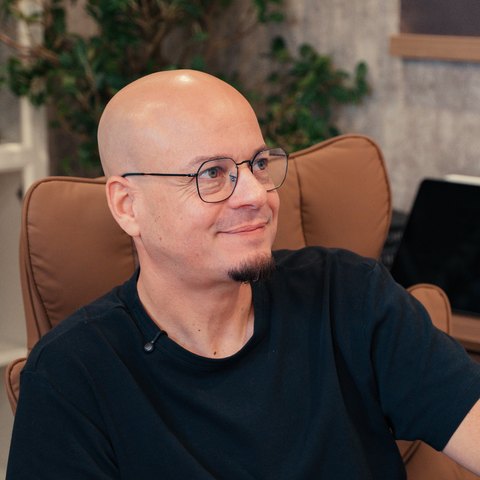
Estéfano Santos · founder of X-Trader and a Nasdaq Futures trader for over 10 years
In the X-Trader program, Estéfano teaches the method he uses every day, with risk management before any trigger.
DISCOVER THE PROGRAM ↗